
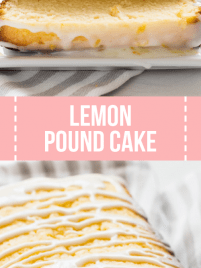
This moist lemon pound cake is the recipe that earns the title of best lemon pound cake you have ever made. Fresh lemon juice and lemon zest worked into a tender, buttery batter made with both butter and shortening for a crumb that is softer and more moist than any all-butter version, baked low and slow until a toothpick comes out clean, and finished with a simple two-ingredient lemon glaze that sets into a thin, slightly crackly shell over the cooled loaf. No frosting required, no complicated technique, and a result that is bright, deeply lemony, and genuinely exceptional.

Haley here from If You Give a Blonde a Kitchen. Something about spring always makes me want to bake lemon desserts. They’re fresh, a little sweet, and just make me happy.
The combination of butter and shortening is the technique detail that makes this pound cake extra moist. Butter brings flavor and the shortening brings tenderness, a slightly higher fat content that coats the flour proteins before the gluten has a chance to develop, producing a finer, more delicate crumb that stays soft for days after baking. Most people cannot identify what makes this cake different from a standard pound cake. The answer is the shortening working quietly in the background.
Why You’ll Love This Recipe
- The butter and shortening combination produces a noticeably more tender, moist crumb than all-butter pound cakes. It is the detail that makes this the best lemon pound cake recipe for texture.
- Fresh lemon juice and zest in the batter mean the lemon flavor is baked directly into every slice rather than existing only in the glaze on top.
- The lemon glaze is two ingredients and takes two minutes. Powdered sugar and fresh lemon juice whisked together produce a clean, bright, slightly tart finish that completes the cake without being heavy or overly sweet.
- It keeps for 3 to 4 days at room temperature covered and stays moist throughout the storage window because of the shortening in the crumb.
- No special equipment beyond a mixer and a loaf pan. This is a genuinely accessible recipe that produces a bakery-quality result.
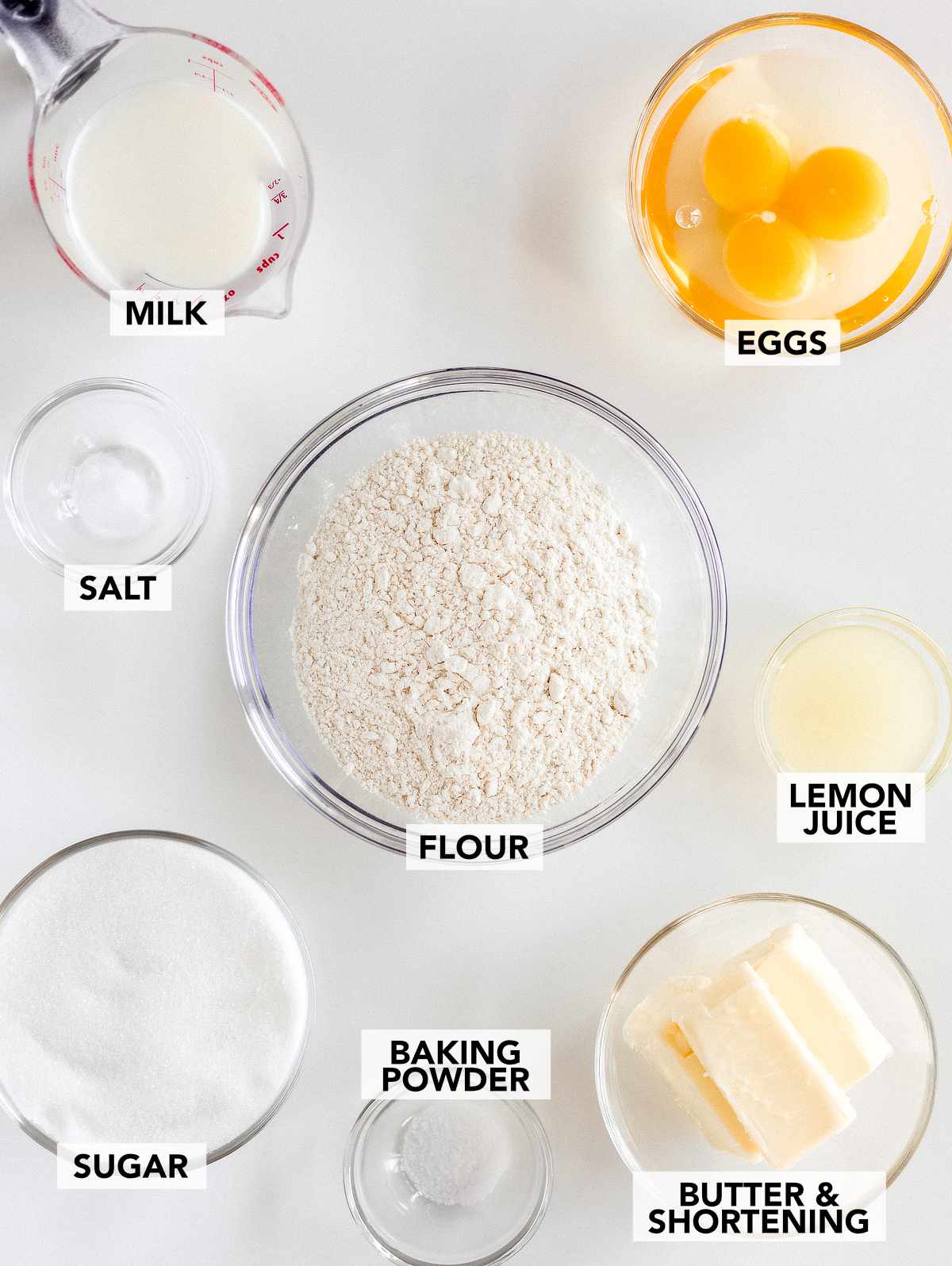
Ingredients Needed to Make Moist Lemon Pound Cake
The Cake
All-purpose flour is the structure. Salt and a small amount of baking powder season and slightly leaven the cake. Unsalted butter at room temperature plus shortening at room temperature is the fat combination that produces the extra moist, tender crumb. Granulated sugar sweetens and creams with the fat to create the aerated base. Three large eggs provide richness and structure. Fresh lemon juice strained of pulp and fresh lemon zest are both present for a fully realized lemon flavor throughout the batter. Whole milk adds moisture and richness.
The Glaze
Powdered sugar sifted to remove lumps and fresh lemon juice whisked together produce a thin, bright, slightly tart glaze that sets on the surface of the cooled cake rather than soaking in. Two ingredients, two minutes, and the finishing touch that makes the cake look and taste complete.
How to Make This Easy Lemon Pound Cake
This recipe uses a classic creaming method, where butter and sugar are beaten together first to build structure, then the rest of the ingredients are added in stages.
Step 1: Prep the pan and oven
Preheat the oven to 350°F. Line a 5×9-inch loaf pan with parchment paper and lightly grease so the cake lifts out easily later.
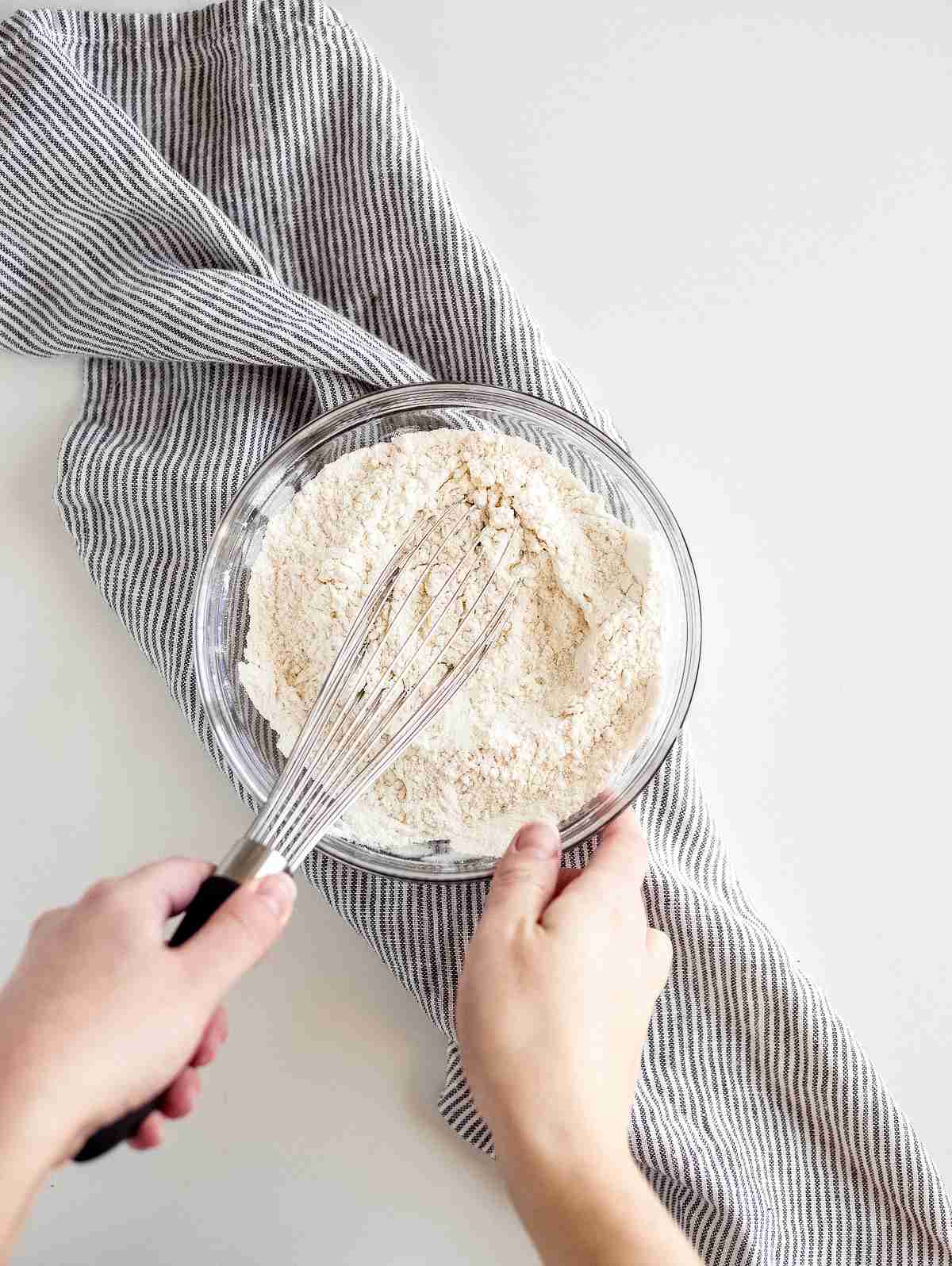
Step 2: Mix the dry ingredients
In a medium bowl, whisk together the flour, salt, and baking powder until evenly combined. Set aside.

Step 3: Cream butter and sugar
In a large bowl, beat the butter, shortening, and sugar until light and fluffy, about 3 minutes.
Pro Tip: You’re looking for a lighter color and a slightly fluffy texture. If it still looks dense or grainy, give it another minute.
Step 4: Add eggs and lemon
Add the eggs one at a time, mixing well after each addition so the batter stays smooth. Mix in the lemon zest and lemon juice.
Pro Tip: The batter may look slightly curdled after adding the lemon juice. That’s normal and it will come together in the next step.
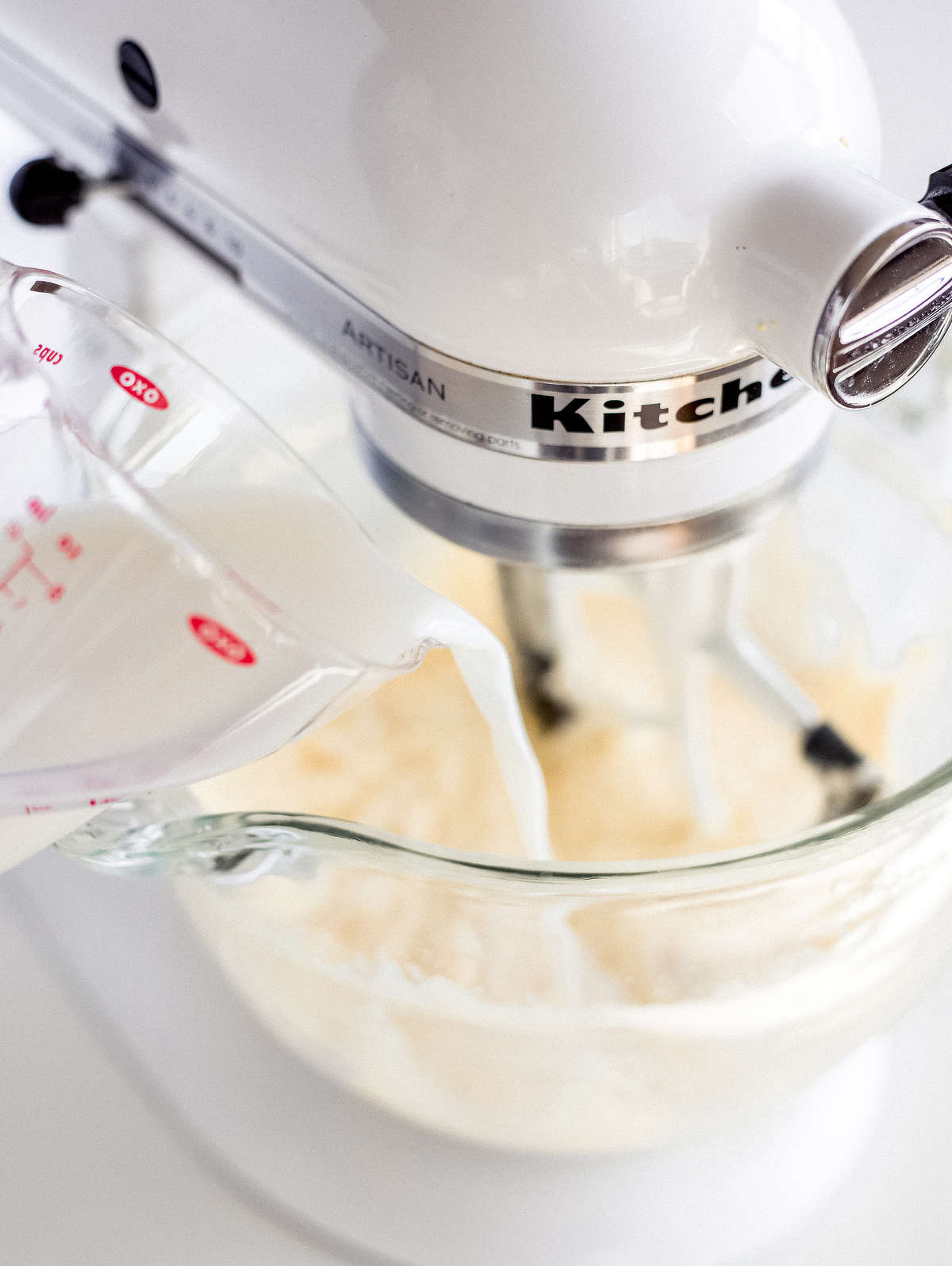
Step 5: Alternate dry ingredients and milk
With the mixer on low, add one third of the flour mixture, then half of the milk. Repeat, ending with the last third of the flour. Mix just until everything is combined.
Pro Tip: Stop mixing as soon as you don’t see dry streaks. Over mixing at this stage can make the cake dense.
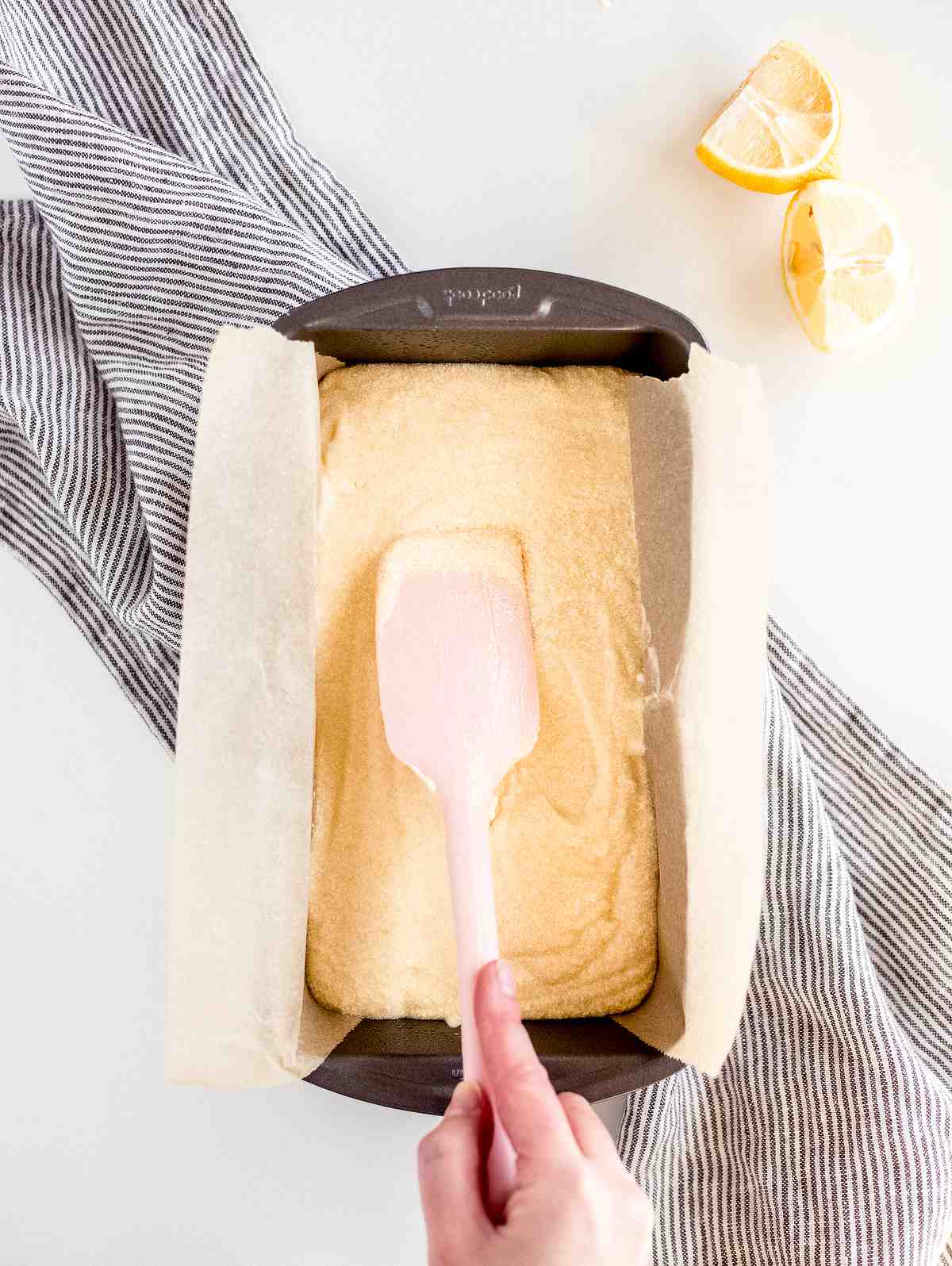
Step 6: Bake
Pour the batter into the prepared pan and gently smooth the top. Bake for 55–60 minutes, or until a toothpick inserted in the center comes out with a few moist crumbs.
Pro Tip: The cake should be lightly golden with a natural crack down the center. If the top is browning too quickly, loosely cover with foil.
Step 7: Cool
Let the cake cool in the pan for about 10 minutes, then lift it out using the parchment and transfer to a wire rack. Let it cool completely before glazing so the glaze doesn’t melt off.

Step 8: Glaze
Whisk together confectioners’ sugar and lemon juice until smooth and pourable. Drizzle over the cooled cake and let it set before slicing.
Pro Tip: The consistency should be thin enough to drizzle. If necessary, add another teaspoon of lemon juice.
Expert Tips for Lemon Pound Cake
- Cream the butter and sugar fully. This is what gives the cake structure. It should look lighter in color and slightly fluffy before moving on.
- Use room temperature ingredients. Cold butter, eggs, or milk can cause the batter to curdle or mix unevenly.
- Measure flour carefully. Too much flour is one of the fastest ways to end up with a dry pound cake. Spoon and level if possible.
- Don’t overmix after adding flour. Mix just until combined to keep the crumb soft instead of dense and tough.
- Watch the bake time closely. Start checking around 55 minutes. A few moist crumbs on a toothpick is perfect. A completely clean toothpick can mean it’s overbaked.
- Let it cool before glazing. If the cake is warm, the glaze will melt right off instead of setting nicely on top.
- Use fresh lemon for best flavor. The zest is where most of the flavor comes from, so don’t skip it.
How to Serve Moist Lemon Pound Cake
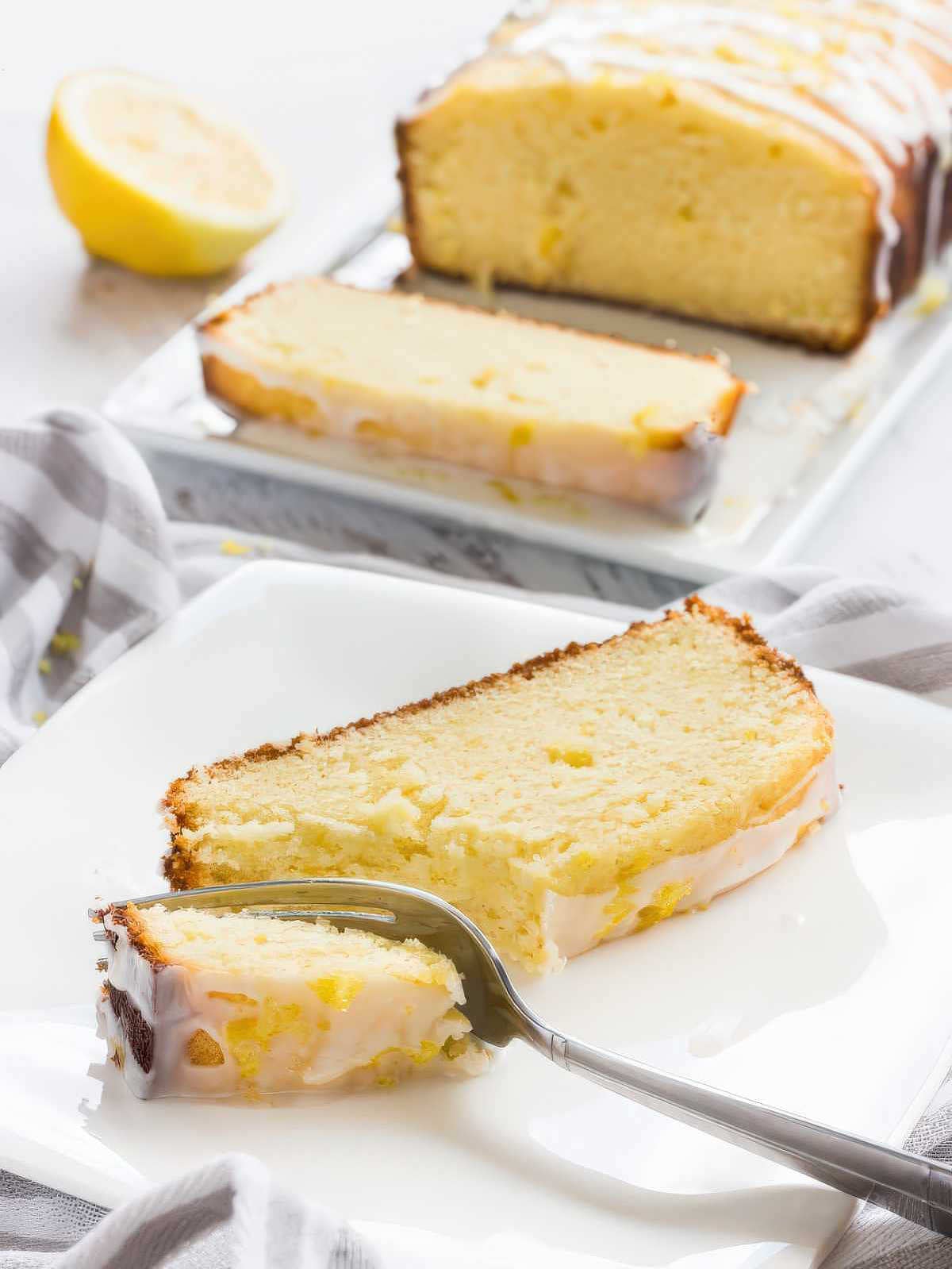
Slice into thick, even slices and serve at room temperature. A light dusting of powdered sugar over the glaze and a few extra curls of lemon zest make the presentation look finished and elegant. Fresh berries alongside each slice add color and a tart fruit element that pairs naturally with the lemon flavor.
Variations and Substitutions
- Use all butter instead of shortening. You’ll get a slightly richer flavor, but the texture may be a little less soft and stable.
- Try Meyer lemons. They’re slightly sweeter and less sharp, which gives a softer lemon flavor.
- Add vanilla extract. About 1 teaspoon adds a subtle warmth that rounds out the lemon.
- Make it extra lemony. Add a bit more zest or increase the glaze slightly for a stronger lemon finish.
- Swap the milk. Buttermilk can be used for a slightly tangier flavor and softer crumb.
- Skip the glaze. The cake still works on its own if you want something less sweet, especially for breakfast or brunch.
Storage, Freezing & Reheating
- Room temperature: Store covered for 3 to 4 days. It stays soft and slices well even after a day or two.
- Freezer: Wrap slices or the whole loaf tightly and freeze for up to 2 months.
- To thaw: Let it sit at room temperature until fully thawed before serving.
- Optional tip: If it’s been sitting a couple days, a quick 10–15 seconds in the microwave softens it right back up.
Frequently Asked Questions About Moist Lemon Pound Cake
Why use both butter and shortening?
Butter and shortening each bring different qualities to a pound cake. Butter contributes flavor, a slight richness, and the classic buttery taste that defines a great pound cake. Shortening has a higher fat content and no water, which means it coats the flour proteins more completely before gluten can develop, producing a finer, more tender, extra moist crumb that stays soft longer after baking. An all-butter pound cake is delicious. A butter and shortening pound cake is noticeably more tender and stays moist for more days without drying out. The combination is the reason this is an extra moist lemon pound cake recipe rather than a standard one.
Can I substitute all butter and skip the shortening?
Yes. Replace the 1/4 cup of shortening with an equal amount of additional unsalted butter. The cake will still be delicious and properly lemon-flavored. The crumb will be slightly less tender and the cake may dry out a day earlier than the original recipe, but the flavor with all butter is excellent and the recipe is completely workable without shortening.
Why does the flour and milk need to be added alternately?
Adding all the flour at once and then all the milk creates an uneven batter where the gluten develops unevenly and the fat and liquid can separate. Alternating the flour and milk in stages allows each addition to incorporate gradually into the emulsified fat and egg base, producing a smooth, homogeneous batter with a more uniform crumb. It also reduces the risk of overmixing since each addition requires only brief mixing before the next goes in.
Can I make this as a bundt cake or round cake instead of a loaf?
Yes. For a bundt cake, double the recipe, grease and flour the pan thoroughly, and bake at 350°F for 55 to 65 minutes until a toothpick comes out clean. For two 8-inch round layers, divide the single recipe between the two pans and bake for 30 to 35 minutes. The loaf format is recommended for this recipe because it produces the classic dense, moist pound cake texture that the name implies, but the batter is flexible and adapts well to other pan formats.
More Loaf Cakes and Easy Bakes
If you liked this pound cake, here are a few more sliceable, shareable bakes that work just as well for brunch, luncheons, or an easy treat to have on hand.
- Chocolate Chip Banana Bread – a soft, classic loaf that’s easy to make and perfect for everyday baking
- Carrot Cream Cheese Swirl Loaf – a moist loaf with a creamy swirl that makes it feel a little more special
- Cardamom Pear Bread with Almond Glaze – lightly spiced with a sweet glaze for something a little different
- Blueberry Breakfast Cake – a tender, lightly sweet cake that’s perfect for brunch or sharing
Made this Easy Lemon Pound Cake Recipe? Leave a review and let me know how it turned out!

Lemon Pound Cake
Ingredients
Method
- Preheat oven to 350° F. Line a 5-inch by 9-inch loaf pan with parchment paper and spray with nonstick cooking spray. Set aside.
- In a medium bowl, whisk together flour, salt and baking powder. Set aside.
- In the bowl of a stand mixer (or in a large bowl using a hand mixer), cream together butter, shortening and sugar until light and fluffy, about 3 minutes. Add eggs one at a time, mixing well after each addition. Add lemon zest and lemon juice, and mix until combined, about 30 seconds.*
- With the mixer on low, add one third of the flour mixture followed by half of the milk. Repeat letting each ingredient mix until mostly combined. Finish by adding the last third of flour mixture and mix just until incorporated. Avoid over mixing.
- Pour cake batter into prepared loaf pan and bake for 55 to 60 minutes or until a toothpick inserted in the center of the pound cake comes out with little to no crumbs on it. Let cake cool for 10 minutes in the pan, then use the parchment paper to lift the pound cake out of the pan and cool completely on a wire rack.
- To make the glaze, whisk together confectioners’ sugar and fresh lemon juice until no lumps remain and a drizzle consistency is reached. If necessary, add another teaspoon of lemon juice. Spoon glaze over the cooled pound cake and serve. Store covered at room temperature for 3 to 4 days.
Nutrition
Notes
- The batter may look slightly curdled after adding the lemon juice. That is okay! Quickly move on to the next step and the cake will turn out beautifully.
- The recipe calls for butter AND shortening. Yes, butter is a type of shortening and you can use all butter for this recipe, if desired.
- You can use Meyer lemons or standard lemons for this recipe.
- While you can use bottle lemon juice in a pinch, we highly recommend using fresh lemon juice for the best texture and flavor.
- Avoid over baking to keep the cake moist.





just wondering why you don’t just say 3/4 cup of butter? It’s not divided in the recipe.
Great question! The recipe calls for 1/2 cup butter and then 1/4 cup shortening or butter, which is easy to miss. Shortening gives the cake a slightly lighter, fluffier texture if you have it on hand
Love this recipe!
I didn’t have any milk so I subbed in 2 tablespoons of vanilla yogurt, a dash of vegetable oil and a dash of boiling water and WOW. It’s actually one of the best cakes I’ve ever eaten!!!!!
Thanks so much for such a great recipe 🙂
I’m so glad you enjoyed. Thank you so much for coming back to leave your review!
The cake looks amazing, I just want a light almost clear glaze, so I can pour over poked holes in the cake.
What do you suggest?????
Yes, you can definitely pole holes and pour it over. To thin out the glaze and make it clearer, you can use less sugar or a teaspoon or two more of the lemon juice (or water.) Enjoy!
What if l don’t have any shortening can l use more butter
Yes, you can substitute the shortening for butter. Enjoy!
Fabulous recipe … thank you. My first thought when looking at the recipe, is that you are the smartest cook I have ever come across … you added a check list to the left of the ingredients. Wow, wow, wow … why didn’t I think of that.
This cake is wonderful and I will be doing it again. BTW … I shared a hefty slice with a friend and just received text saying that is was scrumptious .. doesn’t get any better than that!!