
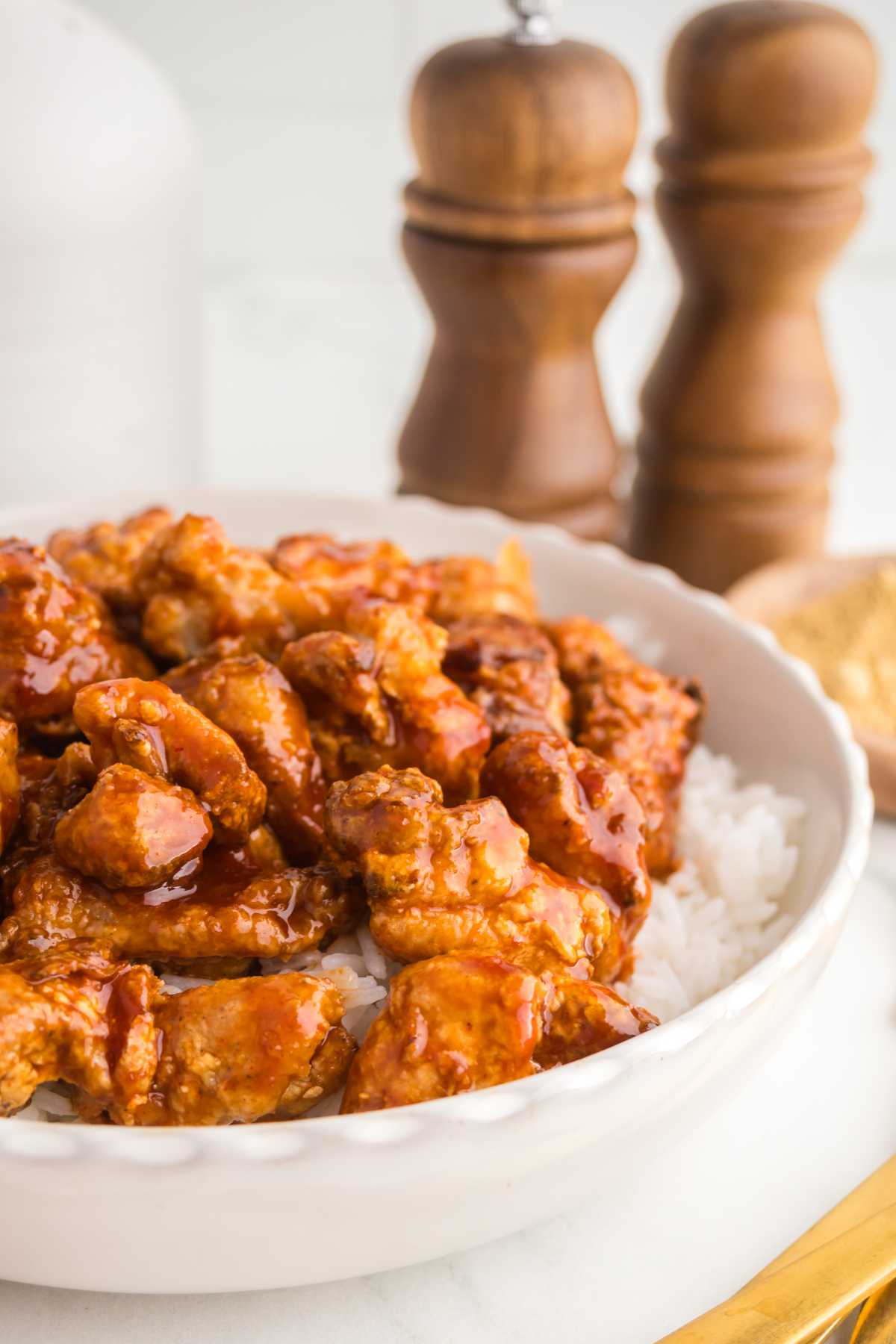
Crispy Gochujang Chicken is an easy dinner made with bite-sized chicken tossed in a sticky sweet and spicy Korean-style sauce. The chicken gets extra crispy in the air fryer from a cornstarch coating, while the gochujang sauce adds bold flavor that tastes like something you would order for takeout on a Friday night.
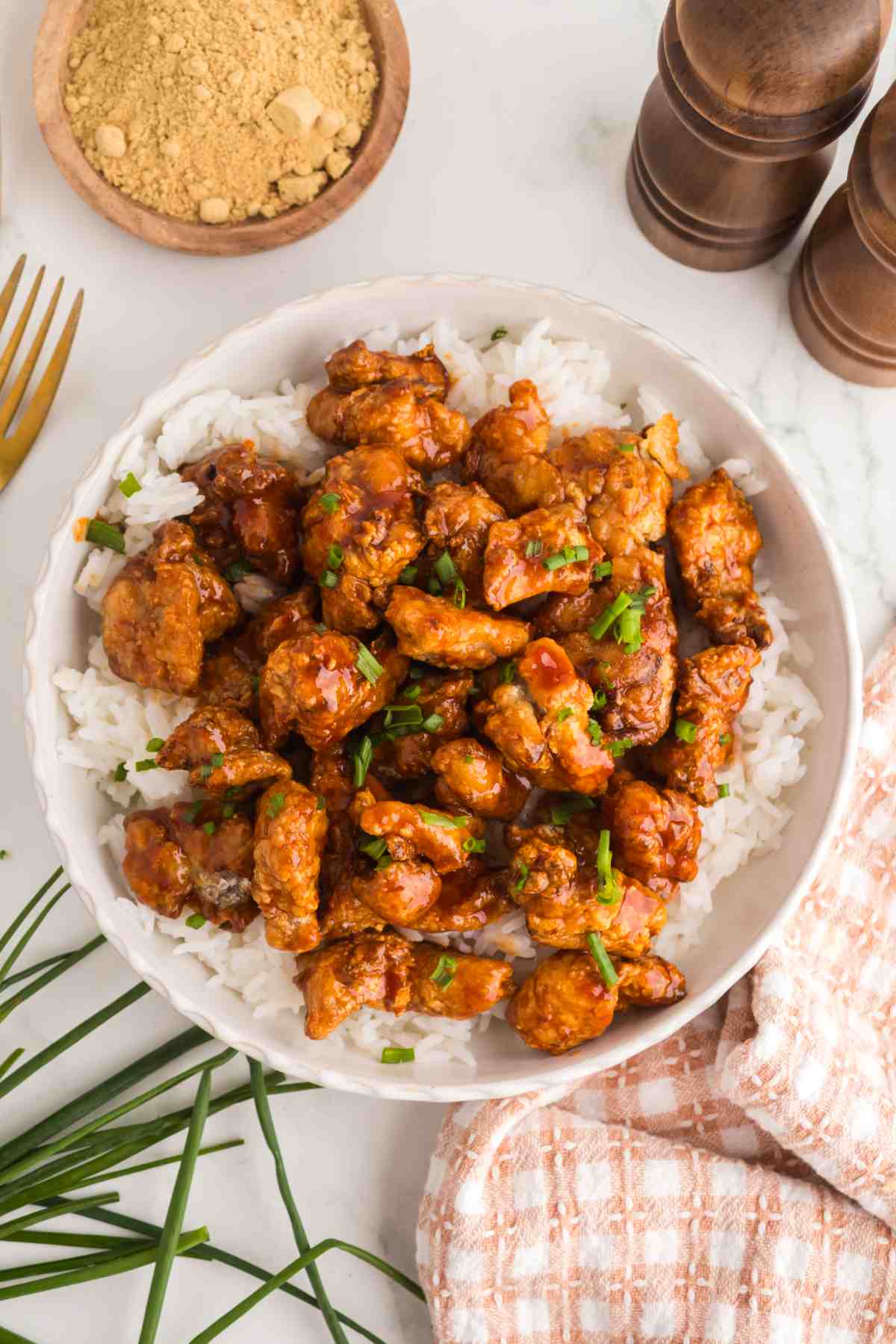
I wasn’t totally sure what to expect the first time Justin brought home gochujang, but now it’s one of our favorite ways to make dinner feel a little more fun. It has a sweet, savory, slightly spicy flavor that makes this chicken taste like really good takeout at home.
The chicken gets really crispy in the air fryer and works with just about anything you have sitting in the fridge. We usually throw it over rice with a bag of stir fry veggies for an easy dinner, but it also makes great meal prep bowls. Add some extra green onions and sesame seeds on top and it suddenly feels like takeout at home.
What to Know Before You Start
- This is a great weeknight dinner option. The chicken cooks quickly in the air fryer, and the sauce comes together while it cooks.
- The flavor is sweet, savory, and slightly spicy. Gochujang gives the sauce a little heat, but the honey and brown sugar help balance it out.
- The chicken gets surprisingly crispy in the air fryer. Cornstarch helps create those crunchy edges without needing deep frying.
- Chicken thighs give the best texture. They stay juicy inside and hold up really well once coated in the sauce.
- This recipe is easy to turn into a full meal. Serve it over rice with stir fry vegetables, broccoli, or whatever veggies you already have in the fridge.
- The sauce coats the chicken really well. The sticky sauce and crispy chicken make it feel a little more fun than the average weeknight dinner.
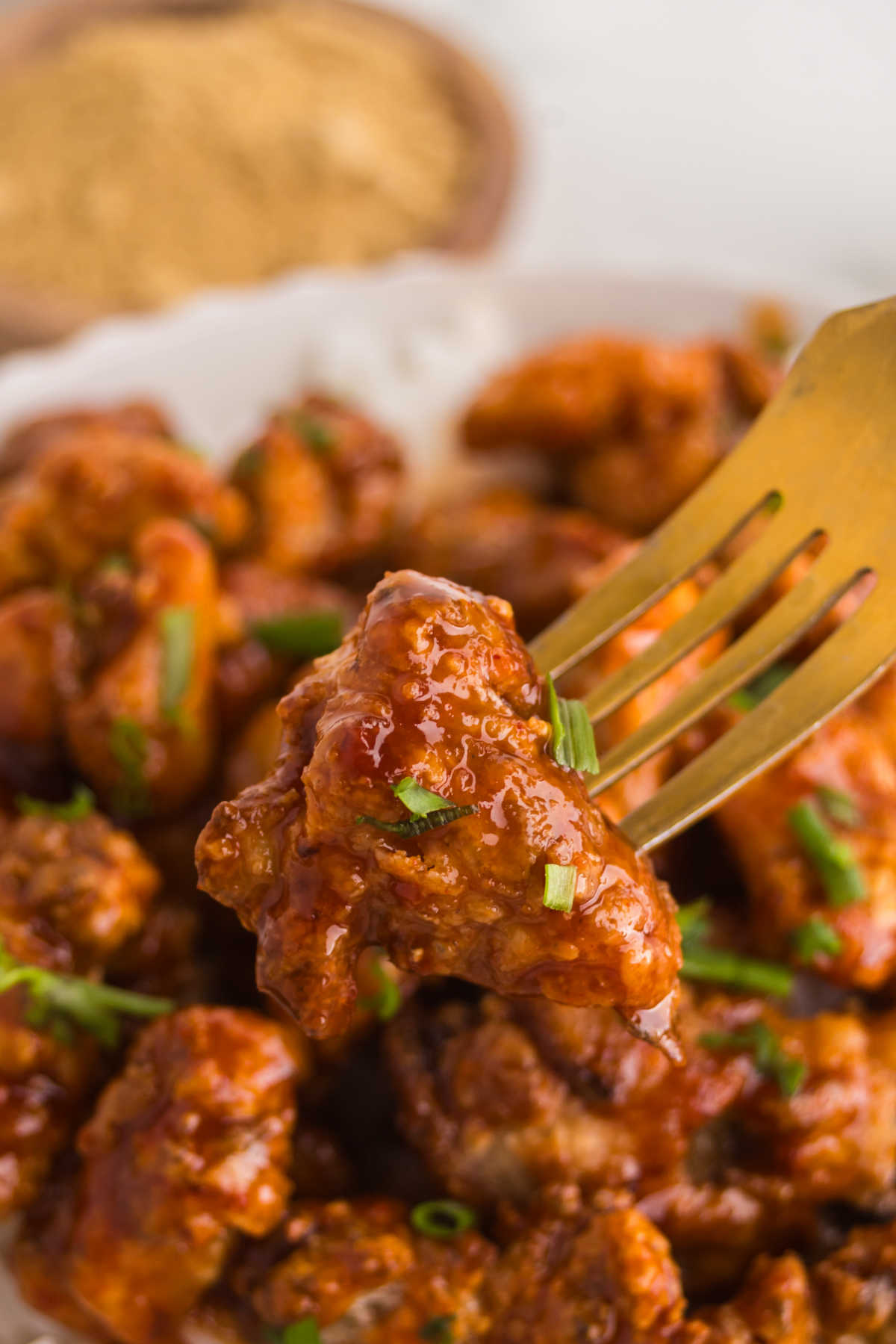
What is Gochujang?
Gochujang is a Korean fermented chili paste that has a sweet, savory, and slightly spicy flavor. It’s thicker than hot sauce and adds a lot of depth to sauces, marinades, and soups.
Most major grocery stores now carry gochujang in the international aisle. The flavor and spice level can vary quite a bit from brand to brand, so it’s always a good idea to start with a little less and add more to taste.
If you prefer less heat, stir in a little extra honey before tossing the chicken in the sauce. If you like more heat, sprinkle the finished chicken with red pepper flakes before serving.
Air Fryer vs. Pan Fried: Time vs. Texture
The air fryer definitely gives this chicken the crispiest, most restaurant-style texture. The coating gets crunchy around the edges while the chicken stays juicy in the middle, and it does a really good job of mimicking that takeout-style bite without deep frying.
That said, air fryer cooking times can vary a lot depending on the size of your basket. Smaller air fryers may need multiple batches, which can make dinner take a little longer on busy nights.
When we’re short on time but still craving this recipe, we’ll sometimes cook the chicken in a skillet on the stove instead. You won’t get quite the same crispy texture as the air fryer, but it still turns out really flavorful and makes a great quick dinner.
Ingredients You’ll Need
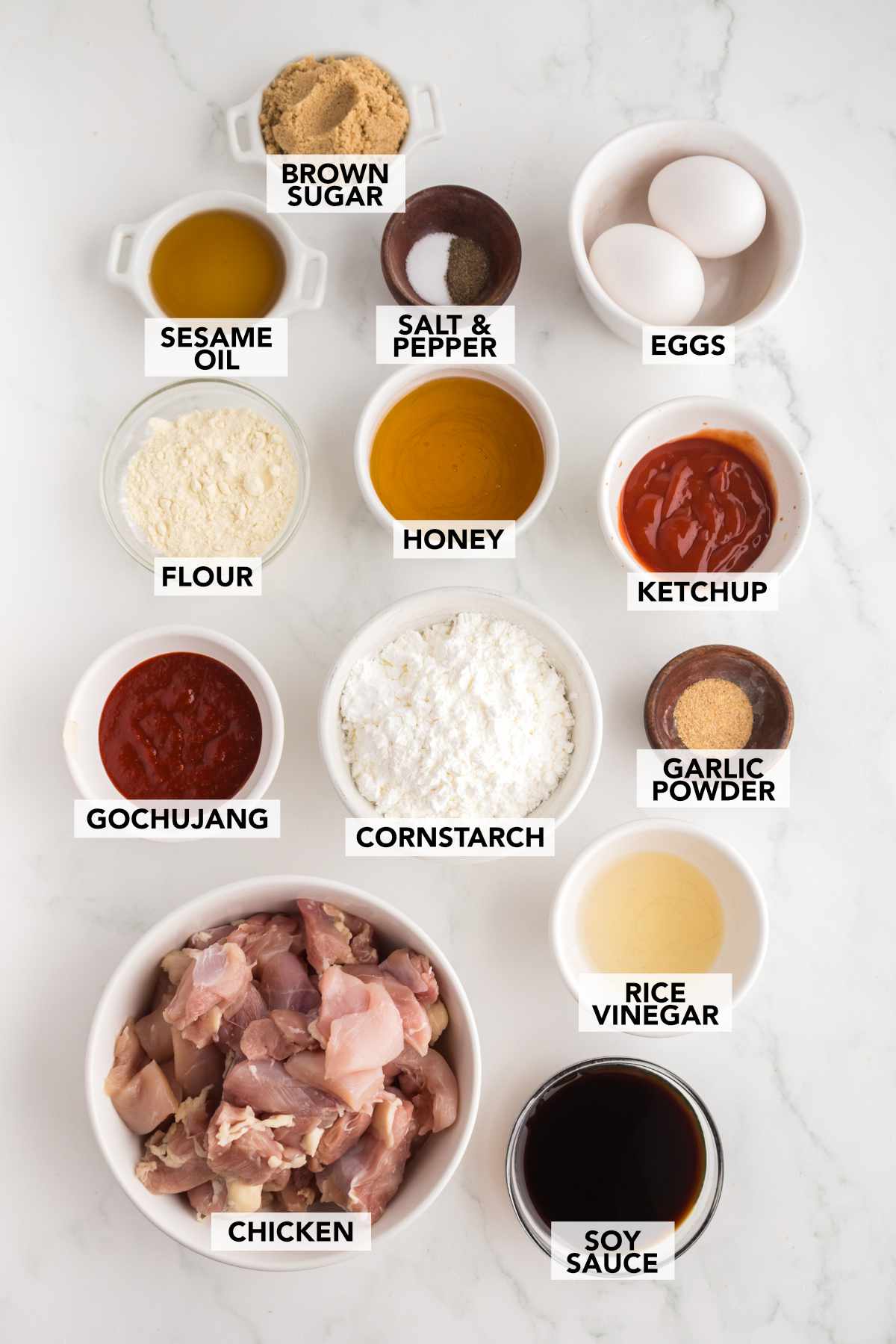
- Chicken thighs – Stay juicy and tender while crisping nicely in the air fryer. Chicken breasts can also be used if preferred.
- Eggs – Help the coating stick to the chicken while creating texture around the edges.
- Soy sauce – Adds salty umami flavor to both the chicken and sauce.
- Cornstarch – The key ingredient for getting that extra crispy coating in the air fryer.
- Flour – Helps balance the coating and gives it structure.
- Gochujang – Creates the bold sweet and spicy flavor in the sauce.
- Honey and brown sugar – Balance the spice and help create the sticky texture.
- Rice vinegar – Adds brightness and keeps the sauce from tasting too heavy.
- Sesame oil – Adds rich toasted flavor and gives the sauce more depth.
How to Make Crispy Gochujang Chicken
This recipe uses a simple air fryer method that creates crispy chicken without the mess of deep frying. The sauce comes together while the chicken cooks, so everything is ready around the same time.
Step 1: Prep the chicken
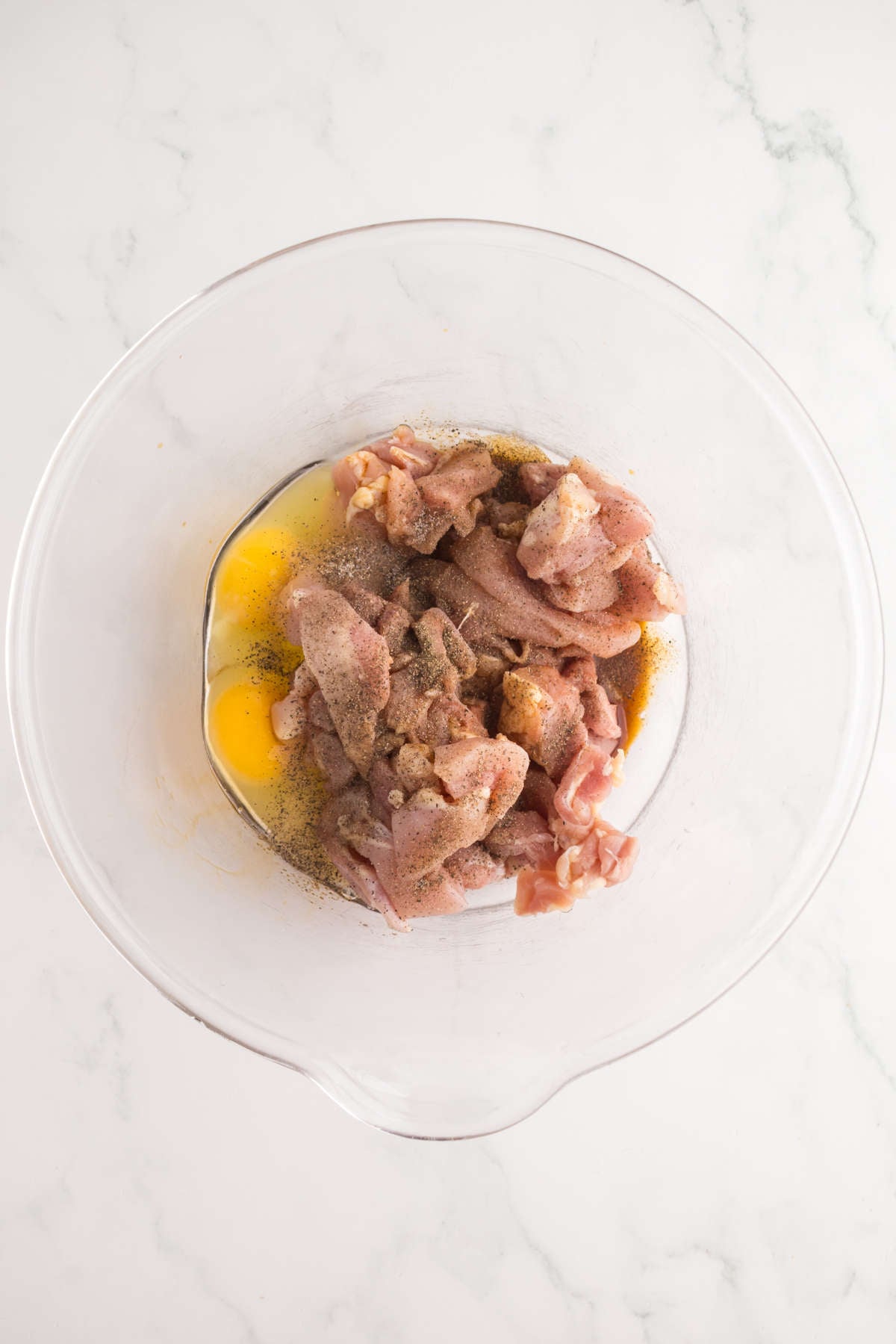
Dice the chicken thighs into bite-sized pieces and add them to a large mixing bowl. Beat the eggs until smooth, then pour them over the chicken along with the soy sauce. Toss until the chicken is fully coated.
In a separate bowl, whisk together the cornstarch, flour, salt, and black pepper.
Transfer the chicken into the dry mixture, letting any excess egg mixture drip off first. Toss until every piece is evenly coated.
Pro Tip: Use one hand for the wet chicken and the other hand for the dry coating. If you use both hands for everything, you’ll quickly end up with a sticky batter mess coating your fingers instead of the chicken.
Step 2: Air fry until crispy
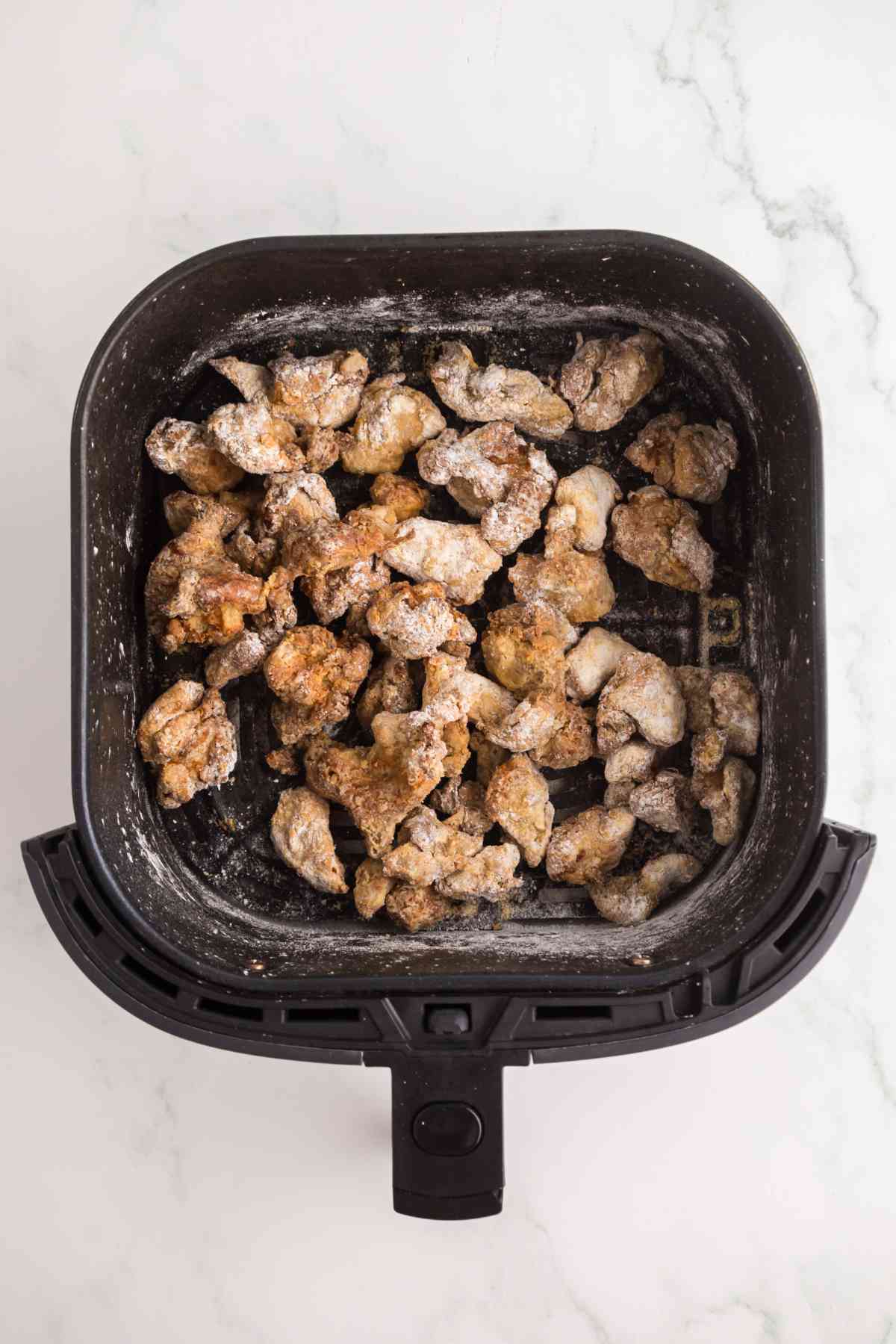
Arrange the coated chicken pieces in a single layer in the air fryer basket. Cook at 370°F for about 18 minutes, shaking the basket halfway through cooking.
The chicken should look golden brown around the edges and crispy on the outside. The internal temperature should reach 165°F.
Pro Tip: Air fryer sizes vary a lot. If your basket is smaller, cook the chicken in batches so the pieces have room to crisp instead of steam.
Optional Stovetop Method
If you want to skip cooking multiple air fryer batches, you can cook the chicken in a large skillet instead.
Heat a thin layer of oil in a large skillet over medium to medium-high heat. Once the oil is hot, add the coated chicken in an even layer and cook for about 8 to 10 minutes, stirring occasionally, until the chicken is golden brown, crispy in spots, and fully cooked through.
You may need to work in batches depending on the size of your pan.
Pro Tip: The stovetop version cooks faster for larger batches, but the air fryer gives the chicken a crispier, more restaurant-style texture.
Step 3: Make the sauce
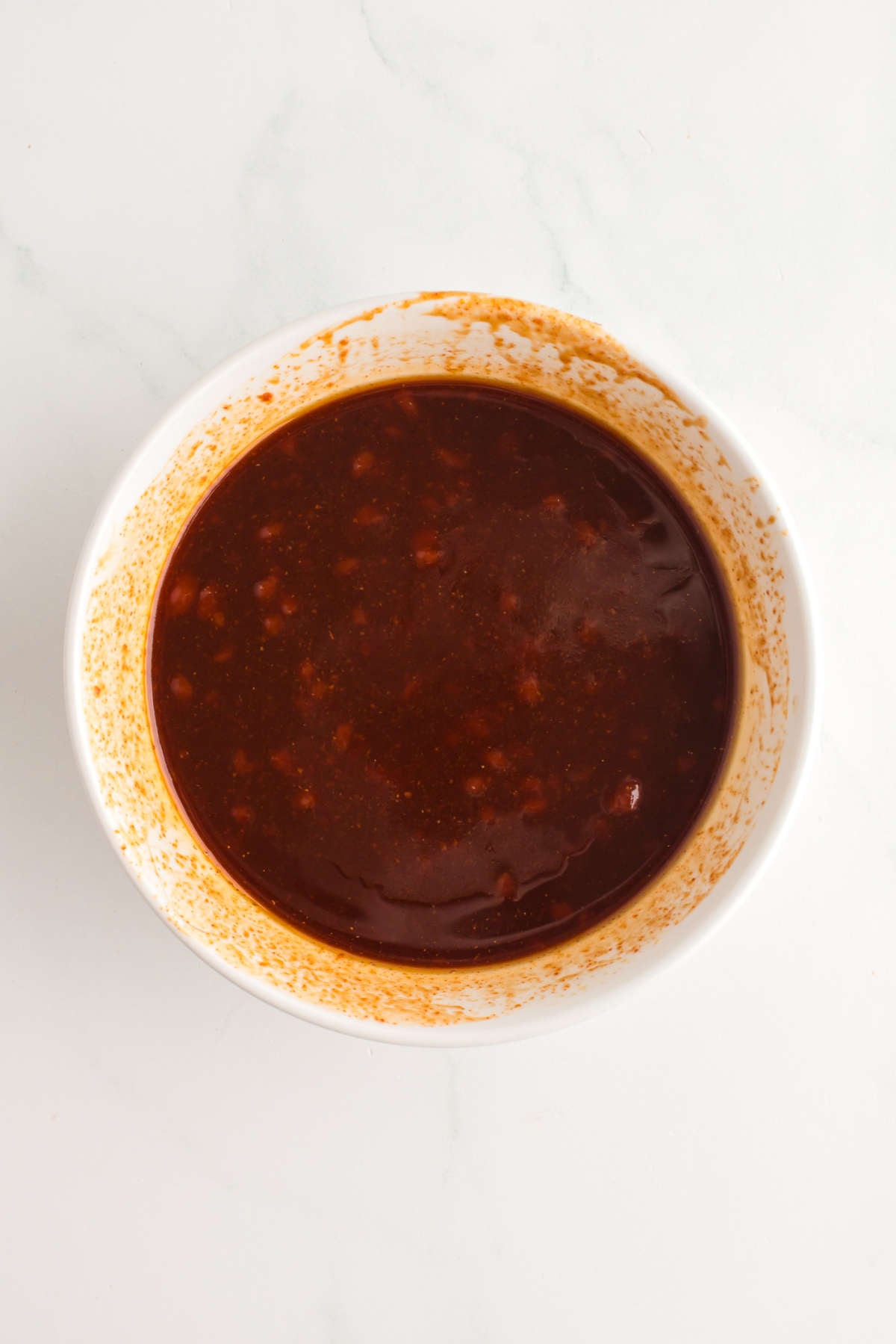
While the chicken cooks, whisk together the gochujang, brown sugar, ketchup, honey, garlic powder, soy sauce, rice vinegar, and sesame oil in a medium bowl.
The sauce should look smooth, glossy, and thick enough to coat the back of a spoon.
Pro Tip: Start with a little less gochujang if you are sensitive to spice and taste test the sauce. You can always whisk in more at the end.
Step 4: Toss and serve
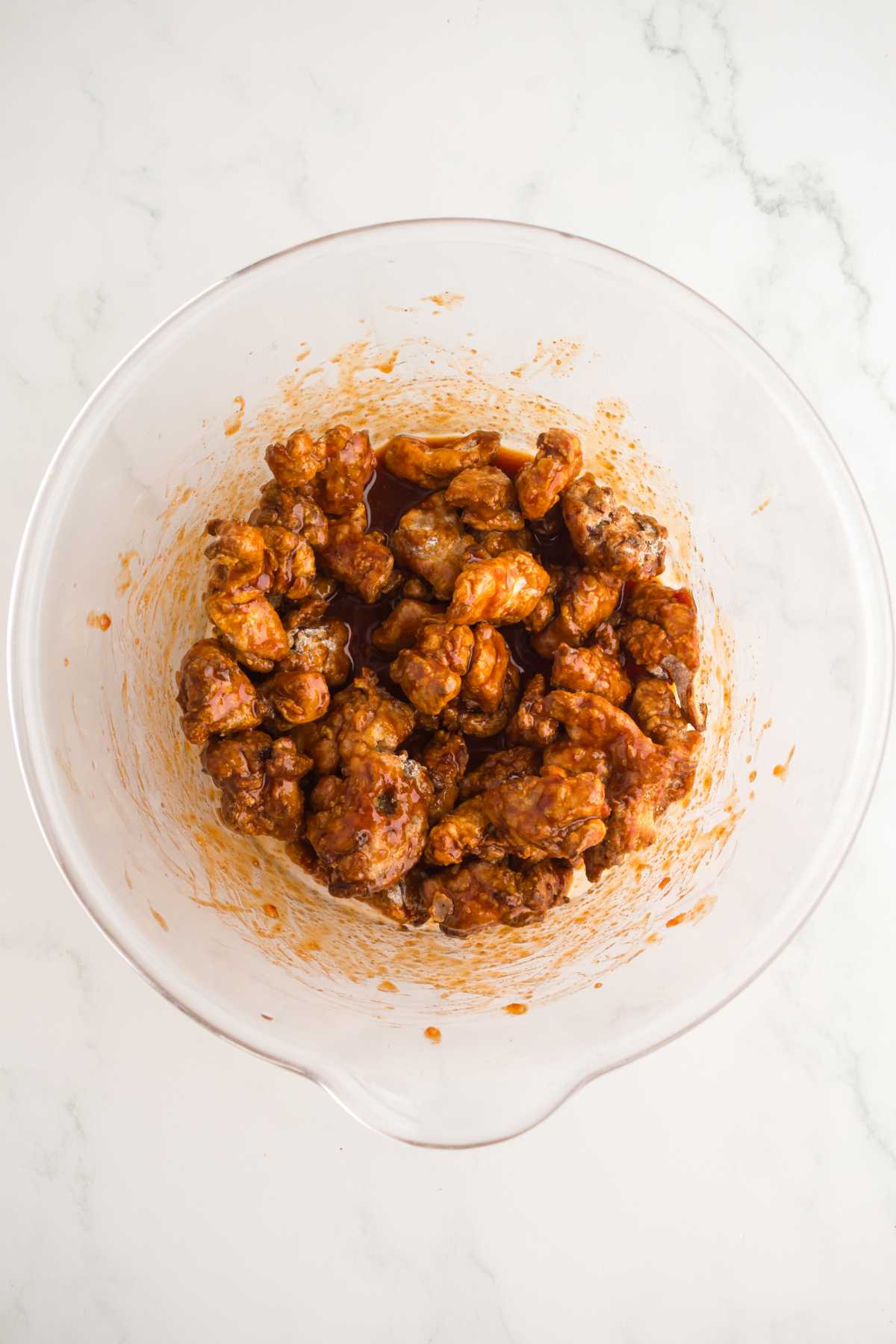
Transfer the hot chicken to a large bowl and pour the sauce over the top. Toss until every piece is evenly coated.
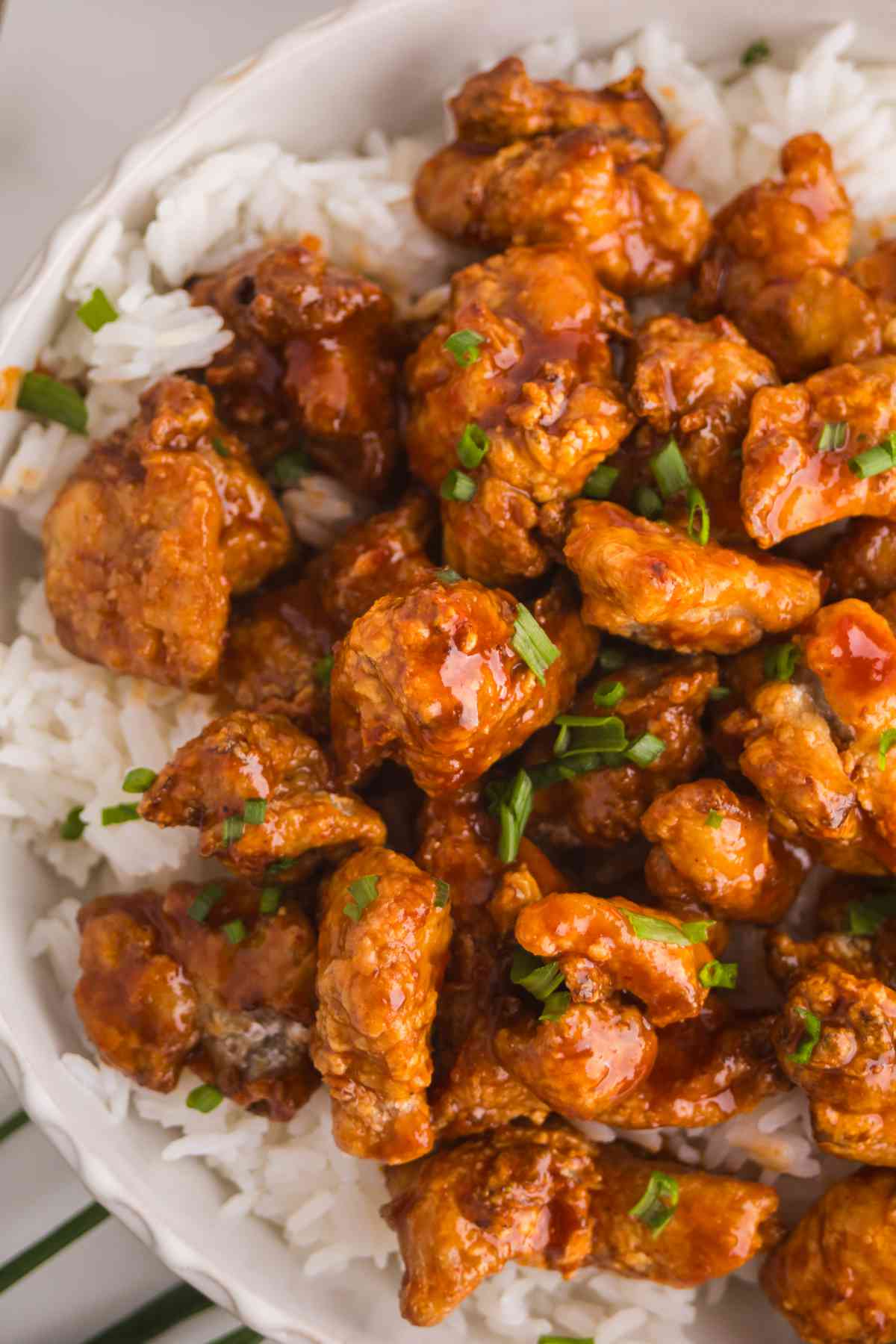
Serve immediately while the chicken is still crispy around the edges. We usually top ours with sesame seeds and green onions, then pile it over rice with stir fry vegetables for an easy dinner.
Expert Tips
- Let the excess egg drip off. Too much liquid can create uneven clumps instead of a light crispy coating.
- Don’t overcrowd the basket. The chicken needs airflow around each piece to crisp properly.
- Shake halfway through cooking. This helps the chicken brown more evenly on all sides.
- Use chicken thighs for the best texture. They stay juicier and hold up better once coated in the sauce.
- Toss in the sauce right before serving. The longer the chicken sits in the sauce, the softer the crispy coating will become.
- Balance the heat with honey. If the sauce tastes too spicy, add a little extra honey.
Variations and Substitutions
- Swap the chicken cut. Chicken breast works well instead of thighs if you prefer a leaner option.
- Use sweet chili sauce instead of gochujang. The flavor will be sweeter, less spicy, and a little less rich.
- Add extra vegetables. Broccoli, snap peas, bell peppers, or simply a bag of frozen stir fry vegetables all work well.
- Turn it into rice bowls. Serve over white rice with cucumbers, carrots, avocado, or steamed vegetables.
- Make it spicier. Add red pepper flakes, chili crisp, or extra gochujang.
- Add more crunch. Top with sesame seeds, chopped peanuts, or crispy onions before serving.
- Make it gluten free. Use gluten free soy sauce and swap the flour for a gluten free flour blend.
Storage, Freezing and Reheating
- Refrigerate leftovers for up to 4 days. Store the chicken in an airtight container in the fridge.
- The air fryer gives the best leftover texture. Reheat at 370°F for 5 to 7 minutes or until warmed through.
- The microwave works in a pinch. The coating will soften a bit, but the flavor will still be great.
- Freeze for up to 2 months. Thaw overnight in the refrigerator before reheating.
- Expect the coating to soften over time. The chicken is crispiest fresh, especially once tossed in the sauce.
FAQs
Is gochujang very spicy?
Gochujang has a mild to moderate spice level with a slightly sweet, savory flavor. Some brands are spicier than others, so it’s best to start with less and add more to taste.
What does gochujang taste like?
Gochujang has a sweet, savory, slightly spicy flavor with deep umami richness from the fermented peppers and soybeans. It adds a lot of flavor to sauces without tasting overwhelmingly hot.
Can I use chicken breast instead of thighs?
Yes. Chicken breast works well in this recipe, but chicken thighs stay juicier and tend to give the best texture once coated in the sauce.
Can I make this without an air fryer?
Yes. You can cook the chicken in a skillet on the stovetop or bake it in the oven at 425°F until crispy and fully cooked.
How do I keep the chicken crispy?
Cook the chicken in a single layer, avoid overcrowding the basket, and toss it in the sauce right before serving. The coating will soften the longer it sits in the sauce.
What can I use instead of gochujang?
Sweet chili sauce is the easiest substitute. The flavor will be sweeter and less spicy, but it still works well with the crispy chicken.
Can I make Crispy Gochujang Chicken ahead of time?
You can prep the sauce and coat the chicken ahead of time, but the chicken is crispiest when cooked fresh. Leftovers reheat best in the air fryer.
More Takeout-Inspired Dinners
If you love easy dinners with bold flavors and takeout-style vibes, here are a few more recipes to add to your rotation.
- Honey Butter Chicken – Crispy chicken tossed in a sweet and savory buttery sauce that feels perfect for a quick comfort dinner.
- Air Fryer Orange Chicken – A lighter homemade version of the takeout favorite with crispy chicken and sticky orange sauce.
- Garlic Sesame Chicken Stir Fry – An easy stir fry packed with vegetables, garlic flavor, and a savory sesame sauce.
- Shrimp Lo Mein – Quick noodles tossed with shrimp, vegetables, and a simple homemade lo mein sauce.
- Beef and Broccolini Stir Fry – Tender beef and crisp vegetables cooked in a flavorful stir fry sauce for an easy weeknight dinner.
Made this Crispy Gochujang Chicken? Leave a review and let me know how it turned out!

Crispy Gochujang Chicken
Ingredients
Equipment
Method
- Add the chicken, eggs, and soy sauce to a large bowl. Toss until the chicken is fully coated. In a separate bowl, whisk together the cornstarch, flour, salt, and pepper. Coat the chicken in the dry mixture, letting any excess egg drip off first.
- Arrange the chicken in a single layer in the air fryer basket. Cook at 370°F for 18 minutes, shaking the basket halfway through, until the chicken is crispy and cooked through.
- While the chicken cooks, whisk together the gochujang, brown sugar, ketchup, honey, garlic powder, soy sauce, rice vinegar, and sesame oil until smooth.
- Transfer the hot chicken to a large bowl and toss with the sauce until evenly coated.
- Serve immediately over rice with green onions and sesame seeds if desired.
Nutrition
Notes
- Cornstarch helps create the crispy coating.
- Chicken thighs stay juicier than chicken breasts.
- Add extra honey if you prefer less spice.
- Reheat leftovers in the air fryer for the crispiest texture.
- Sweet chili sauce can be used instead of gochujang if needed.