

This lemon loaf cake is soft, buttery, and full of fresh lemon flavor, finished with a simple lemon glaze. It has a tender crumb and bright citrus flavor that makes it just as good with coffee as it is served for dessert.

It fits easily into everyday baking. The batter comes together quickly with simple ingredients, and the loaf keeps well for several days, making it a great option for breakfasts, afternoon snacks, or sharing with friends.
This recipe bakes up more like a light lemon pound cake than a quick bread. The texture is moist and tender with a delicate crumb, balanced by a sweet and tangy lemon glaze.
Read This Before Starting
• Light Lemon Pound Cake Texture: If you like lemon loaf that feels a little more like cake than quick bread, this one hits that sweet spot. The crumb is soft, tender, and just rich enough without feeling heavy.
• Bright Lemon Flavor: Fresh lemon zest and juice give the cake a lively citrus flavor that tastes fresh and balanced rather than overly tart.
• Sour Cream for a Moist Crumb: The sour cream is the little trick that keeps this loaf extra soft and moist, even a day or two after baking.
• Simple Lemon Glaze Finish: A quick powdered sugar and lemon juice glaze adds a sweet, tangy layer that makes the top of the loaf especially good.
• Made with Basic Ingredients: Everything in this recipe is easy to find, and you probably already have most of it in your kitchen.
Is This Lemon Bread or Lemon Cake?
Lemon loaf recipes often fall somewhere between quick breads and traditional cakes. This version leans closer to a lemon pound cake baked in a loaf pan.
The batter uses butter, eggs, and sour cream, which create a richer texture than most lemon breads. The crumb is soft and slightly rich in the way a good loaf cake should be, while still feeling light enough for breakfast or an afternoon snack.
The lemon glaze adds a bright finish that soaks slightly into the top of the loaf, giving each slice an extra pop of citrus flavor.

Ingredients You’ll Need
- Lemon zest and lemon juice – Fresh lemons provide the signature citrus flavor. The zest brings concentrated lemon oils while the juice adds brightness.
- Granulated sugar – Sugar sweetens the cake and also helps create a tender crumb when beaten with the eggs.
- Eggs – Eggs give the loaf structure and richness while helping the batter emulsify smoothly.
- Unsalted butter – Melted butter keeps the loaf moist and adds a subtle richness that pairs well with lemon.
- Sour cream – Sour cream helps create a tender crumb while adding just enough tang to enhance the lemon flavor.
- Cake flour and all-purpose flour – Using both flours balances tenderness and structure. Cake flour keeps the crumb delicate while all-purpose flour provides stability. If you don’t have cake flour, you can make your own with this homemade cake flour substitute.
- Baking powder and baking soda – The combination ensures the loaf rises evenly while maintaining a soft texture.
- Vanilla extract – Vanilla rounds out the citrus flavor and adds warmth to the cake.
- Powdered sugar – Powdered sugar forms the base of the lemon glaze and creates the smooth finish on top of the loaf.
How to Make Lemon Loaf Cake
This lemon loaf cake comes together in a simple mixing process and bakes in about an hour.
Step 1: Prepare the Pan
Preheat the oven to 350°F. Butter a 9 x 5 inch loaf pan, then dust it lightly with flour.
Step 2: Mix the Dry Ingredients
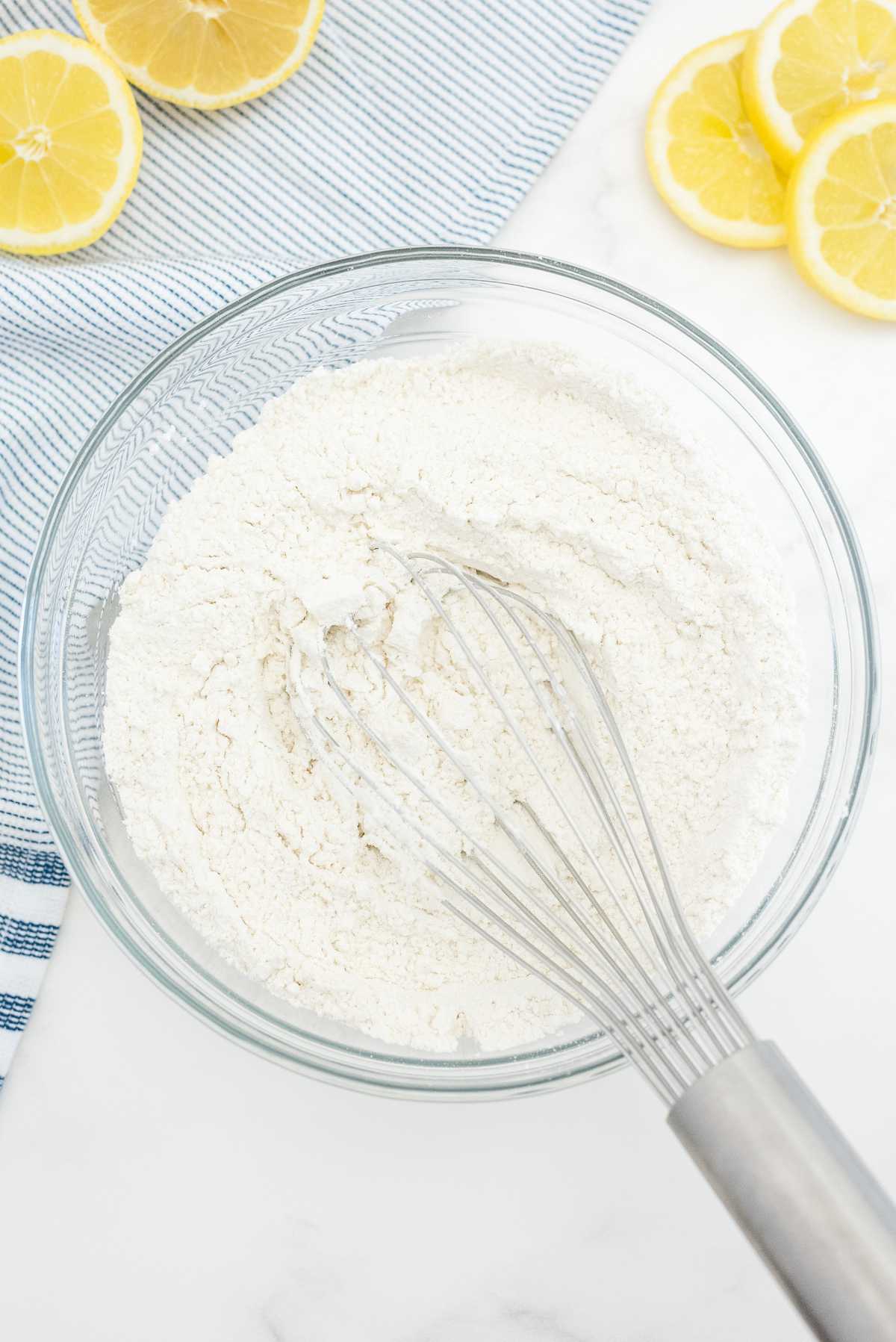
In a medium bowl, whisk together the cake flour, all purpose flour, baking powder, baking soda, and salt.

Step 3: Mix the Wet Batter
In the bowl of an electric mixer fitted with the paddle attachment, combine the sugar, eggs, lemon zest, and lemon juice and mix on low speed until smooth.
Add the melted butter and mix until incorporated.
Step 4: Combine the Batter
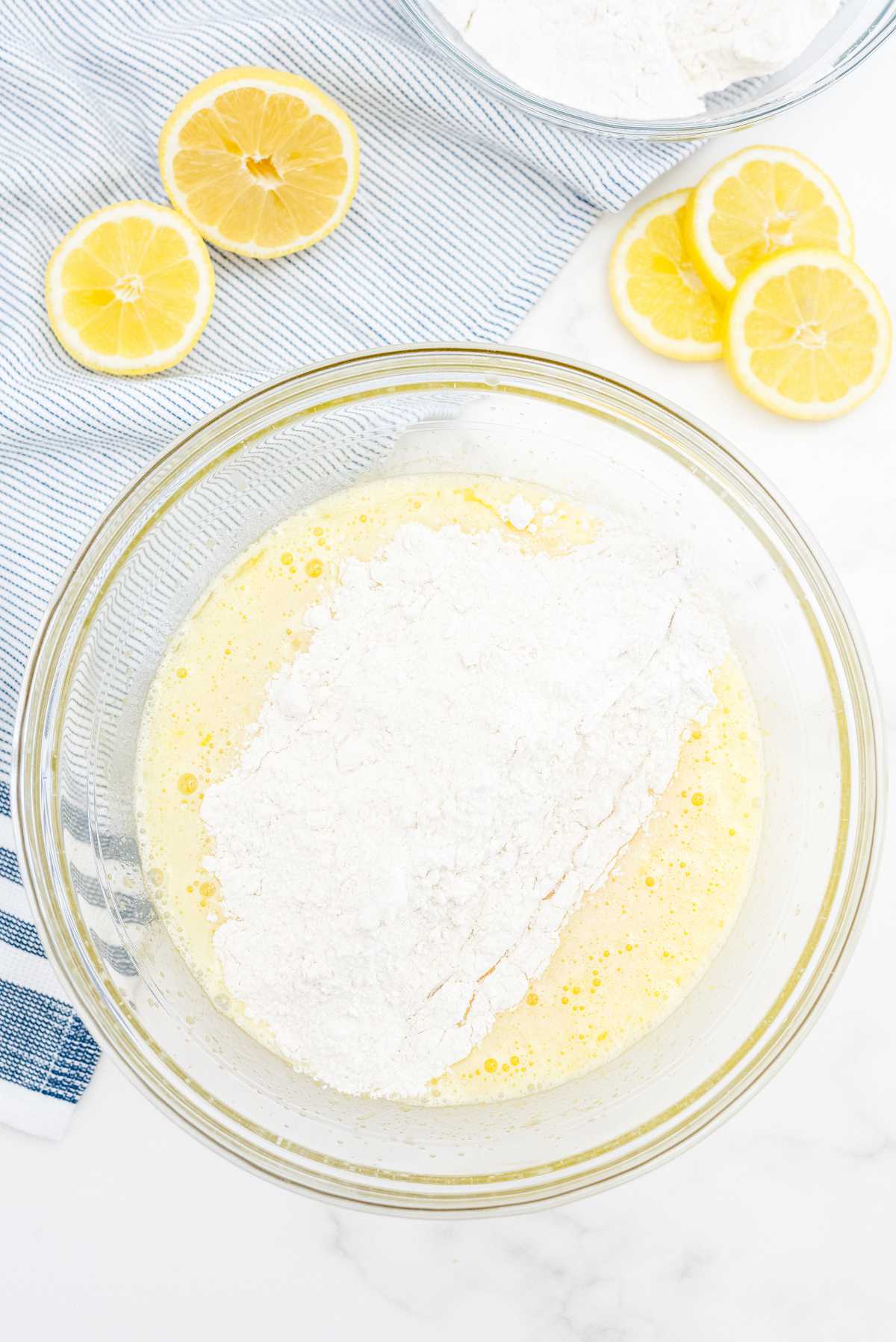
Add half of the dry ingredients and mix just until incorporated. Beat in the sour cream and vanilla until smooth. Add the remaining dry ingredients and mix just until the batter comes together.
Pro Tip: Stop mixing as soon as the flour disappears to keep the crumb tender.
Step 5: Bake the Loaf
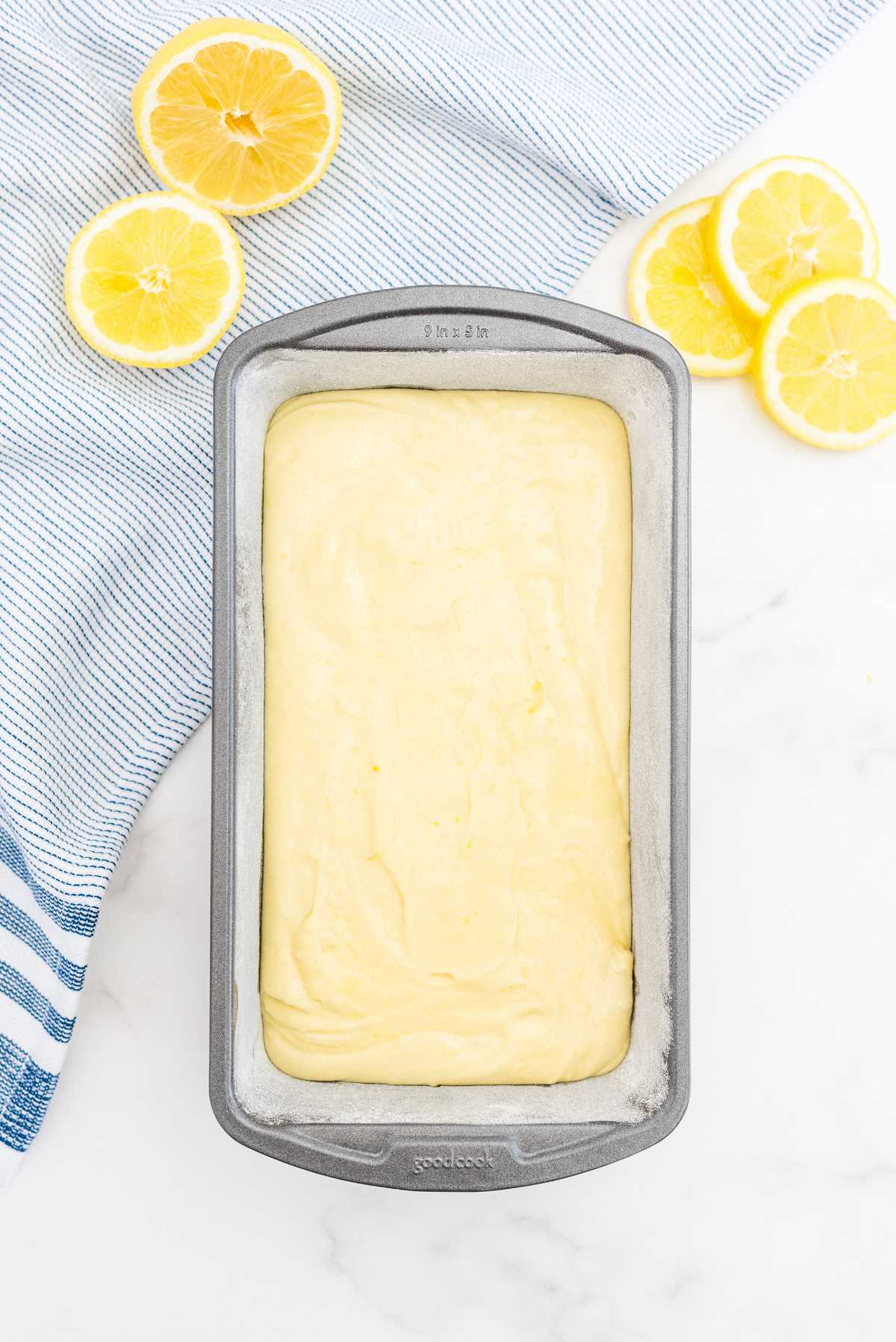
Transfer the batter to the prepared loaf pan.
Bake for 20 minutes, then rotate the pan and reduce the oven temperature to 325°F. Continue baking for 30 to 35 minutes, or until a toothpick inserted into the center comes out clean.
Step 6: Cool the Cake
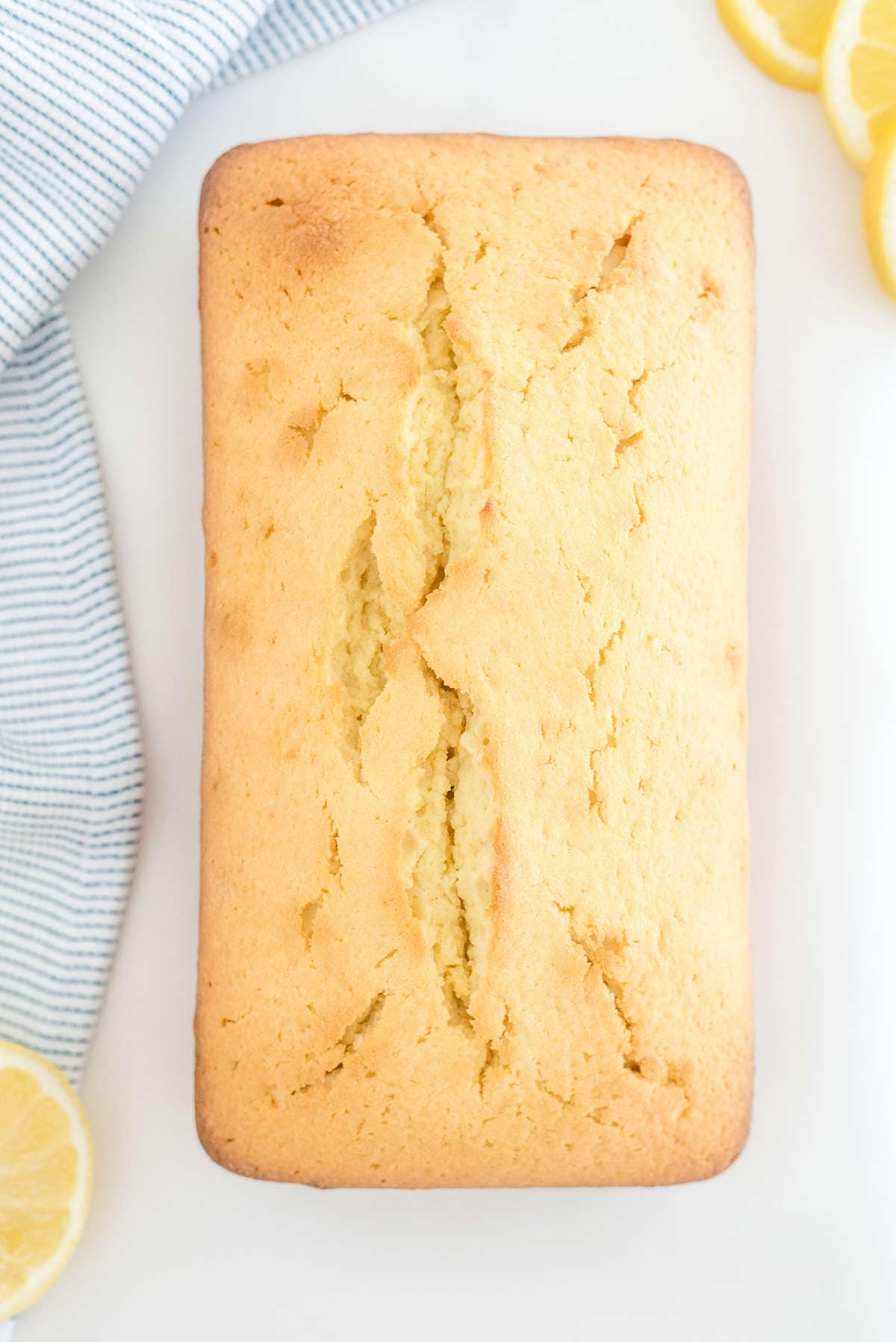
Allow the loaf to cool in the pan for at least 15 minutes before removing and transferring to a cooling rack.

Step 7: Make the Lemon Glaze
Once the cake has completely cooled, whisk together the powdered sugar and lemon juice until smooth.

Step 8: Add the Lemon Glaze
Drizzle the glaze over the top of the loaf and allow it to set before slicing.
Expert Tips
- Use Fresh Lemon Zest: If you want the lemon flavor to really shine, fresh zest is the key. The zest carries most of the bright citrus flavor, so it’s worth grabbing a fresh lemon rather than bottled juice.
- Swap Greek Yogurt for Sour Cream: If you don’t have sour cream, plain Greek yogurt works well here. Use the same amount and the loaf will still bake up soft and tender.
- Prevent the Loaf from Sticking: Butter and lightly flour the loaf pan so the cake releases easily after baking.
- Check the Loaf Near the End: Toward the end of baking, start peeking at the loaf. The top should look lightly golden and a toothpick in the center should come out clean or with just a few soft crumbs.
- Mix Just Until the Flour Disappears: Once you add the flour, keep mixing to a minimum. As soon as the batter looks smooth and the flour is blended in, you’re good to go.
- Want More Lemon Flavor?: If you love a really lemony loaf, add a little extra zest to the batter. You can also brush the warm loaf with a bit of lemon juice and sugar before glazing for an extra pop of citrus.
- Adjust the Glaze to Your Taste: Prefer a thicker bakery-style glaze? Use a little less lemon juice. Want a light drizzle that soaks in slightly? Just add a bit more.
Variations
- Lemon Poppy Seed Loaf: Stir 1 to 2 tablespoons of poppy seeds into the batter for a classic lemon poppy seed variation.
- Berry Lemon Loaf: Fold in about ½ cup of fresh blueberries or raspberries for a fruit-forward version that pairs beautifully with the lemon flavor.

Serving Ideas
This lemon loaf cake is bright, lightly sweet, and easy to serve in a variety of ways.
Serve it alongside fresh fruit for brunch or with coffee as a simple afternoon treat. It also pairs well with light desserts and citrus forward recipes.
Try serving it with:
- Strawberry Shortcake Trifle
- Angel Food Cake with Strawberries
- Berry Fruit Salad
- Lemon Berry Cookie Fruit Tartlets
- Berry Rosé Sangria
Storage, Freezing & Reheating
Store the lemon loaf covered at room temperature for up to 3 days.
For longer storage, refrigerate the loaf for up to 5 days. Allow slices to come to room temperature before serving for the best texture.
To freeze, wrap the loaf tightly in plastic wrap and store in a freezer safe bag for up to 2 months. Thaw overnight in the refrigerator or at room temperature before serving.
For best results, freeze the loaf without the glaze and add the glaze after thawing.

FAQs
This usually happens when the batter is overmixed. Once the flour is added, mix just until it disappears. Overmixing can make the loaf heavier instead of soft and tender.
Yes. You can replace the cake flour with all purpose flour if that’s what you have on hand. The loaf will still work, but the texture may be slightly less soft and delicate.
A lemon loaf usually sinks if it was underbaked or if the oven door was opened too early. Make sure a toothpick inserted in the center comes out clean before removing it from the oven.
Yes. Lemon loaf actually tastes even better after it rests for a few hours because the flavors settle and the crumb becomes more tender.
Sour cream helps keep this loaf soft and moist for several days. Storing the loaf tightly covered at room temperature also helps prevent it from drying out.
More Easy Sweet Bread Recipes to Bake
If you enjoy baking one good loaf, chances are you’ll want to try another. These sweet breads are just as simple to make and perfect for breakfast, afternoon snacks, or sharing with friends.
- Easy Chocolate Chip Banana Bread
- Moist Pumpkin Bread with Maple Glaze
- Apple Cinnamon Bread with Greek Yogurt
- Blueberry Banana Bread
- Pear Bread with Almond Glaze
Made this Lemon Loaf Cake? Leave a review and let me know how it turned out!

Lemon Loaf Cake
Ingredients
Method
- Preheat the oven to 350 degrees F. Butter the sides and bottom of a 9 x 5-inch loaf pan. Dust with flour and set aside.
- In a medium bowl, combine the flours, baking powder, baking soda, and salt. Whisk and set aside. In the bowl of an electric mixer fitted with a paddle attachment, combine the sugar, eggs, lemon zest and lemon juice. With the mixer on low speed, mix in the melted butter. Add half of the dry ingredients just until incorporated. Beat in the sour cream and vanilla until combined. Mix in the remaining dry ingredient just until incorporated.
- Transfer the batter to the prepared pan. Bake 20 minutes, then rotate pan and reduce the oven temperature to 325 degrees F. Continue baking 30 to 35 minutes or until a toothpick inserted in the center comes out clean. Let cool in the pan for at least 15 minutes.
- When the cake is completely cool, combine the confectioners’ sugar and lemon juice in a small bowl and whisk to blend until smooth. Drizzle the glaze over the top of the loaf. Let stand briefly until the glaze hardens. Slice and serve.
Nutrition
Notes
- For the best lemon flavor: Use fresh lemon zest and juice. Bottled juice won’t give the same bright citrus taste.
- Don’t overmix the batter: Once the flour is added, mix just until it disappears to keep the loaf tender.
- Glaze tip: Let the loaf cool completely before adding the glaze so it sets nicely on top instead of melting into the cake.
- Storage: Keep the loaf covered at room temperature for up to 3 days or refrigerate for up to 5 days.


Are the measurements metric ? I assume you ate in USA so wondering if I need to adjust for metric ?
TIA
I have both measurements! In the recipe card, just below the ingredients, you can click “US Customary” or “Metric” to switch between them. I have readers from all over, and I’ve been getting lots of requests to include metric measurements too.
I’m sorry that happened, that’s so frustrating. A rubbery or dry texture usually comes from the batter being overmixed or the loaf being slightly overbaked. Also overbaking can make that eggy taste more noticeable since the other flavors fade a bit. For a stronger lemon flavor, use a really fresh lemon to zest or a little extra zest can help. If you want to try again, I’m happy to help troubleshoot step by step!
This was such a great recipe! A must have for any lemon lover!
I just finished making this and it was AMAZING!! So full of lemon flavor. I did use your “homemade cake flour” recipe, reduced the sugar to 3/4 of a cup and reduced the butter to 8 tablespoons (16 just seemed like too much comparing the fat in other quickbread recipes) and the bread came out perfect! In total, I was also able to reduce the number of calories in the recipe by 890 calories!! I haven’t tried it with the glaze yet as the bread is still cooling (but I couldn’t wait to try it, so I had to chop off an end to taste before fully cooled), but will add a hint of glaze tomorrow. Even without the glaze…this recipe still tastes great!! Will definitely be making again!!
Thanks so much for your detailed feedback!
Delicious!! will have to try it out!
Wow! This is definitely my kind of breakfast! Looks so delicious.
This cake came out beautifully with just the right amount of lemon flavor. Thanks for the recipe! Will be making again.